


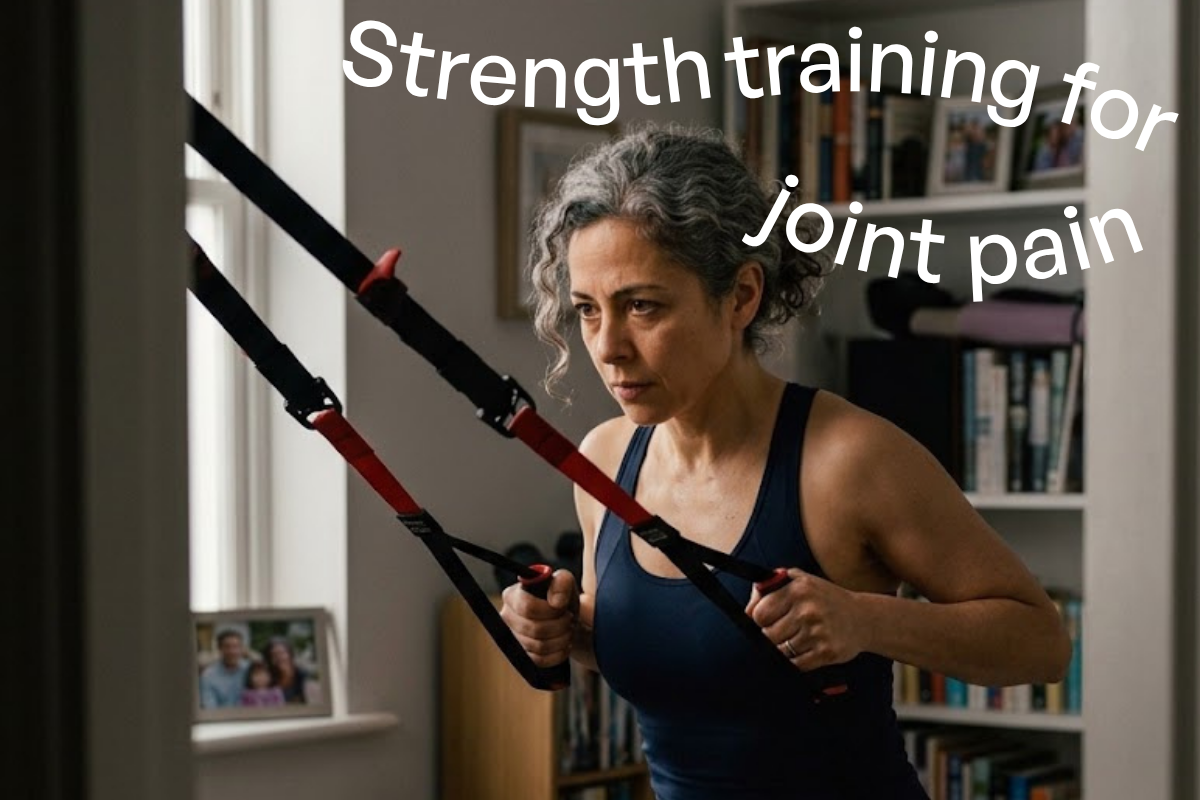
If you often have stiff or aching joints, it’s understandable that lifting weights might feel like the last thing you’d want to be doing. But as counter-intuitive as it seems to put extra strain on your body, strength training is actually a very effective way of supporting healthy joints, improving mobility and making day-to-day life that little bit easier.
When you strengthen the muscles around your joints, you are actually reducing the amount of stress that they experience when you move about. So whether you’re managing the symptoms of osteoarthritis – or simply aiming to stay active while ageing gracefully – here’s how strength training can play a role in maintaining your joint health.

How ageing impacts our joints
Our joints go through an awful lot during our lifetimes. The cartilage that provides a cushion between bones is gradually worn down, becoming thinner and less protective, meaning our joints slowly become less able to absorb the impact of everyday movement.
Meanwhile, we also start losing muscle mass and strength as we get older, and this accelerates with ageing if steps aren’t taken to stay active. With muscles providing less support for the joints, the joints need to work harder and can become stiff, uncomfortable and less flexible as a result.
While all these changes are natural and normal, they can be mitigated by strength training, in order to maintain muscle mass and support joints so that you can stay active for longer.
How strong muscles support healthy joints
Our joints are surrounded by muscle tissue, and if these muscles are strong they help control our movement, improve balance and reduce the impact of everyday stresses on the joints.
The quadriceps (thigh muscles), for example, support the knees by absorbing the shocks of walking, running, climbing stairs or standing up. Meanwhile, your gluteal muscles support your hips, and the core muscles – including your pelvic area, abdominal muscles and lower back – help provide stability to your spine.
So if you happen to be experiencing issues with your knee, focusing on strengthening your quadriceps could reduce the strain on your knee joint by sharing the workload to these neighbouring muscles.
Better balance means fewer falls
Strengthening the muscles that support your joints means that your reaction time is improved, because stronger muscles respond more quickly when we lose our balance. Regular strength training also improves coordination generally, making it easier to stay upright if you stumble or trip.
This is all the more important as we get older, when muscle mass is decreasing and falls become more common, often leading to injuries or loss of confidence that can make staying active difficult.
Strength training to ease osteoarthritis
As mentioned above, it can feel logical to think that strength training is going to make your osteoarthritis symptoms worse, but the reality is that appropriate strength training is often medically recommended as a way of managing osteoarthritis.
Because greater muscle strength lessens the load on affected joints, it can help to improve joint function and decrease the amount of pain experienced during everyday movement and tasks. Regular exercise also helps to minimise stiffness and ensure you remain as mobile as possible.
That said, you should always speak to a healthcare professional like a GP or physiotherapist if you are considering strength training to address osteoarthritis or ongoing joint pain. They will be able to recommend appropriate exercises that are tailored to your circumstances, ensuring that you stay safe and get the most from your efforts. Working closely with a physio doing strength training can help to re-align joints or make sure they are being used correctly, with the right range of movement.
The best strength-training for you
Strength training to improve your joint health isn’t about spending countless hours in the gym – it’s about finding the gentle exercises that work for you, many of which can be done at home initially.
A great place to start is with bodyweight exercises like squats, step-ups, bridges and wall sits; the fact that these rely on your body weight for resistance means you are less likely to overexert yourself. Resistance bands offer another way to gently yet effectively build your strength.
You should try to do strength exercises two or three times per week, making sure your muscles get enough recovery time between each session. Being careful not to overdo your exercise is vital, so start slowly and gradually challenge yourself further as your strength increases.
As always, you should listen to your body, stop if you are feeling any pain or discomfort, and seek advice from a health professional if the issue persists.
Stay strong, stay active
So as off-putting as the idea of strength training may seem if your joints aren’t feeling at their best, building muscle mass around the affected areas can actually be a vital part of the puzzle when it comes to managing your symptoms.
Think of strength training as an investment in your future; building up the muscular support that you will need to stay stable, pain-free and active for many years to come. And if you’re looking for a drug-free way to support your overall joint health FlexiSEQ uses plant-based lubrication to help achieve this.